

Table of Contents
- Introduction
- What Is KPV Peptide?
- Why KPV Has Captured Researchers’ Attention
- How KPV Is Studied: Mechanisms Under the Microscope
- Key Research Areas Where KPV Shows Up
- KPV at a Glance
- Why Batch Verification Matters More Than Ever
- Nation Peptides KPV: What You Get
- KPV in Multi-Pathway Research: Klow and Related Compounds
- Handling, Storage, and Reconstitution
- Ordering, Shipping, and Support
- Responsible Research Use
- Final Thoughts
- FAQs
Key Takeaways
- KPV is a three-amino-acid fragment of α-MSH, studied for inflammatory signaling.
- Research focuses on NF-κB, cytokines, and epithelial immune pathways.
- Verified purity and batch-matched COAs protect your data.
- Klow blends KPV with GHK-Cu, BPC-157, and TB-500.
- Nation Peptides products are for laboratory research only.
Few small molecules generate as much curiosity in inflammation research as KPV. It is built from just three amino acids, lysine, proline, and valine, yet this tripeptide has appeared in cell and animal studies for well over a decade. The questions it raises still shape how laboratories think about immune signaling.
KPV is a three-amino-acid fragment of the hormone α-MSH that research suggests may calm key inflammatory pathways, which is why it is studied in cytokine and epithelial immune-response models.
If you want reliable information, or are looking for what are the benefits of KVP peptide, you are in the right place. This guide unpacks the KPV peptide benefits that scientists investigate, explains the biology in plain language, and shows what to look for in verified lab material. It also covers storage, reconstitution, and how Nation Peptides supports KPV research with independent, batch-matched testing.
Nation Peptides serves researchers from domestic warehouses in the US, EU, and Australia, with a certificate of analysis for every batch. That standard of transparency is exactly what a compound like KPV demands.
Let us start with the basics.
What Is KPV Peptide?
KPV is a tripeptide, meaning a peptide made of three amino acids joined in a fixed order: lysine (K), proline (P), and valine (V). The letters in its name are simply the one-letter codes for those residues. In research settings, KPV is described as a compound derived from α-MSH and investigated for modulation of inflammatory signaling, cytokine activity, and epithelial immune-response pathways.
In practical terms, it is a very small molecule with a very specific origin story. That combination is what makes it interesting to study.
The Sequence in Plain English
Each amino acid in the chain plays a role:
- Lysine (K): a positively charged amino acid that helps the chain interact with other molecules
- Proline (P): an amino acid that puts a rigid bend in the chain, shaping its three-dimensional form
- Valine (V): a hydrophobic amino acid that rounds out the sequence
Together they form Lys-Pro-Val, one of the shortest bioactive sequences studied in immunology research.
Where does KPV Come From?
KPV is the C-terminal end of α-MSH, short for alpha-melanocyte-stimulating hormone. α-MSH belongs to the melanocortin family, a group of signaling peptides tied to pigmentation, immune regulation, and more.
Researchers noticed that much of α-MSH’s anti-inflammatory character could be traced to its last few amino acids. That observation pointed to a compact fragment worth studying on its own.
The result is a research compound that offers:
- A simple, well-defined sequence
- A clear biological parent molecule
- A growing body of published laboratory work
Why KPV Has Captured Researchers’ Attention
Plenty of peptides promise interesting biology. KPV stands out because it combines simplicity with a mechanism that keeps producing questions worth answering.
Small Size, Big Signaling Questions
A three-residue peptide is easy to characterize. Identity testing is straightforward, and purity can be measured with confidence. For laboratories that care about clean, repeatable results, that matters a great deal.
Here is why KPV keeps showing up in protocols:
- Clear parentage: it traces to a well-studied hormone
- Defined structure: only three residues means fewer variables
- Pathway relevance: it is linked to the signaling cascades that drive inflammation
- Reference value: it often serves as a comparison point against single-pathway and dual-pathway compounds
That last point is worth remembering. Many protocols use KPV not as the star of the show, but as a benchmark that helps researchers interpret what other compounds are doing.
One Statistic Worth Knowing
Here is a number that puts KPV’s design in perspective. α-MSH is a 13-amino-acid neuropeptide, and KPV corresponds to just its final three residues, positions 11 to 13, or roughly 23% of the parent chain. (Source)
Think about that for a moment. Nearly a quarter of the parent molecule’s length is carrying the part of the story that researchers find so compelling. That is an unusually efficient piece of molecular design.
How KPV Is Studied: Mechanisms Under the Microscope
When researchers talk about what KPV does, they usually mean what it does inside cells. Three themes come up again and again.
Inflammatory Signaling Pathways
Inflammation is not one switch. It is a network of intracellular pathways that relay signals from the cell surface to the nucleus. Two of the most discussed are NF-κB and the MAPK cascade.
In a widely cited study in Gastroenterology, KPV reduced both the NF-κB and MAPK pathways and the subsequent synthesis of proinflammatory cytokines. That finding is a big reason KPV remains a staple in inflammation research.
Why do those pathways matter?
- They sit upstream of many inflammatory outputs
- They respond to a wide range of cellular stressors
- They are common targets in comparative studies
Cytokine Activity
Cytokines are the messenger proteins that cells use to coordinate immune responses. Too much signaling can drive tissue stress in experimental models, so cytokine readouts are a favorite endpoint.
Work on the α-MSH fragment has pointed in a consistent direction. The tripeptide’s anti-inflammatory properties were linked to inhibition of TNF-α, IL-6, and nitric oxide production in LPS-stimulated murine microglial cell culture.
Researchers typically track:
- TNF-α levels
- IL-6 levels
- Nitric oxide output
- IL-10, a cytokine associated with the parent hormone’s anti-inflammatory effect
Epithelial Immune-Response Pathways
Epithelial surfaces form the body’s first line of contact with the outside world. In the lab, epithelial cells are a valuable model because they both receive and generate immune signals.
One reason KPV fits this area so well is transport. The anti-inflammatory effect of KPV was reported as mediated by PepT1, a di/tripeptide transporter, rather than by melanocortin receptors. A three-residue peptide is exactly the right size for that kind of transporter, which gives researchers a clear route to study how it enters cells.
That is a neat piece of biology. The very feature that makes KPV small also gives it a defined way in.
Key Research Areas Where KPV Shows Up
Now to the practical question: where does KPV actually get used? Here are the main areas, and the KPV peptide benefits that researchers look for within each.
Inflammation Models
The most established application is inflammation research. In the Gastroenterology work mentioned above, KPV was examined in two separate mouse models of colitis, in addition to its in vitro effects.
Typical goals in this area include:
- Measuring changes in proinflammatory cytokine output
- Mapping effects on NF-κB and MAPK signaling
- Comparing KPV against other α-MSH related fragments
- Establishing baseline responses before adding other compounds
Barrier and Epithelial Studies
Because KPV interacts with epithelial immune-response pathways, it is a natural candidate for barrier research. Scientists use epithelial cell lines to study how inflammatory signals disrupt normal function, and how a compound might change that picture.
Common experimental angles:
- Transporter expression and uptake
- Cell-to-cell signaling under inflammatory stress
- Responses to inflammatory triggers in culture
- Differences between inflamed and resting cell states
Cellular Regeneration Research
At Nation Peptides, KPV is listed in the Cellular Regeneration category, alongside compounds studied for remodeling, migration, and repair. That placement reflects how researchers often use it. Inflammation and tissue repair are deeply linked, so a compound that touches inflammatory signaling naturally belongs in regeneration protocols.
Researchers exploring this link often ask:
- How does inflammatory tone influence cellular migration?
- Can adjusting inflammatory signaling change remodeling outcomes?
- What happens when KPV is combined with repair-focused compounds?
Comparative and Multi-Pathway Protocols
KPV is frequently used as a reference point against compounds that act on a single pathway. Its clean, well-defined profile makes it a useful control.
That role makes sense for protocols that:
- Compare single-pathway and multi-pathway effects
- Need a consistent anti-inflammatory benchmark
- Layer several compounds and track each contribution
KPV at a Glance
Here is a quick reference for the details that matter most.
| Attribute | Detail |
| Full name | Lysine-Proline-Valine (Lys-Pro-Val) |
| Parent molecule | α-MSH (alpha-melanocyte-stimulating hormone) |
| Length | 3 amino acids |
| Research focus | Inflammatory signaling, cytokine activity, epithelial immune pathways |
| Appearance | White lyophilized powder |
| Strength at Nation Peptides | 10mg |
| Verified batch purity | 99.89% by HPLC |
| Independent tests passed | Identity, purity, sterility, endotoxin |
| Category | Cellular Regeneration |
| Use | Laboratory research only |
Why Batch Verification Matters More Than Ever
A peptide this small leaves very little room for error. A tiny impurity can skew a cytokine readout. A mislabeled vial can quietly invalidate weeks of work. That is why testing is not a bonus feature. It is the foundation of the whole experiment.
What a Certificate of Analysis Tells You
A certificate of analysis, or COA, is the lab’s report card for a specific batch. A good one confirms several things at once:
- Identity: the vial contains what the label says
- Purity: the percentage of the target compound, usually measured by HPLC
- Sterility: the absence of microbial contamination
- Endotoxin: the absence of bacterial fragments that can trigger false inflammatory signals
That last item deserves extra attention in inflammation research. Endotoxin is itself a potent inflammatory trigger. If a sample carries it, your results may reflect contamination rather than the compound you meant to study.
The Nation Peptides Testing Standard
Nation Peptides does not test in-house. Every batch goes to an accredited third-party laboratory with no commercial interest in the result. For the current KPV batch, the independent lab Freedom Diagnostics tested the material on July 10, 2026, and it passed identity, purity, sterility, and endotoxin checks. Purity was confirmed at 99.89% via HPLC.
A few more details that researchers appreciate:
- HPLC plus mass spectrometry for double validation
- Contaminant screening that includes endotoxin and heavy metals
- Batches that do not pass simply do not ship
- Certificates posted exactly as received, unedited
How to Verify Your Own Vial
You never have to take anyone’s word for it. Here is how to check:
- Find the batch number on your vial label
- Scan the QR code printed on the label
- Land on the exact certificate page for that lot
- Compare the results with your own records or an independent test
You can also browse the full library on the Nation Peptides COA page any time. That kind of openness is rare, and it is the reason many labs trust the brand with repeat orders.
Nation Peptides KPV: What You Get
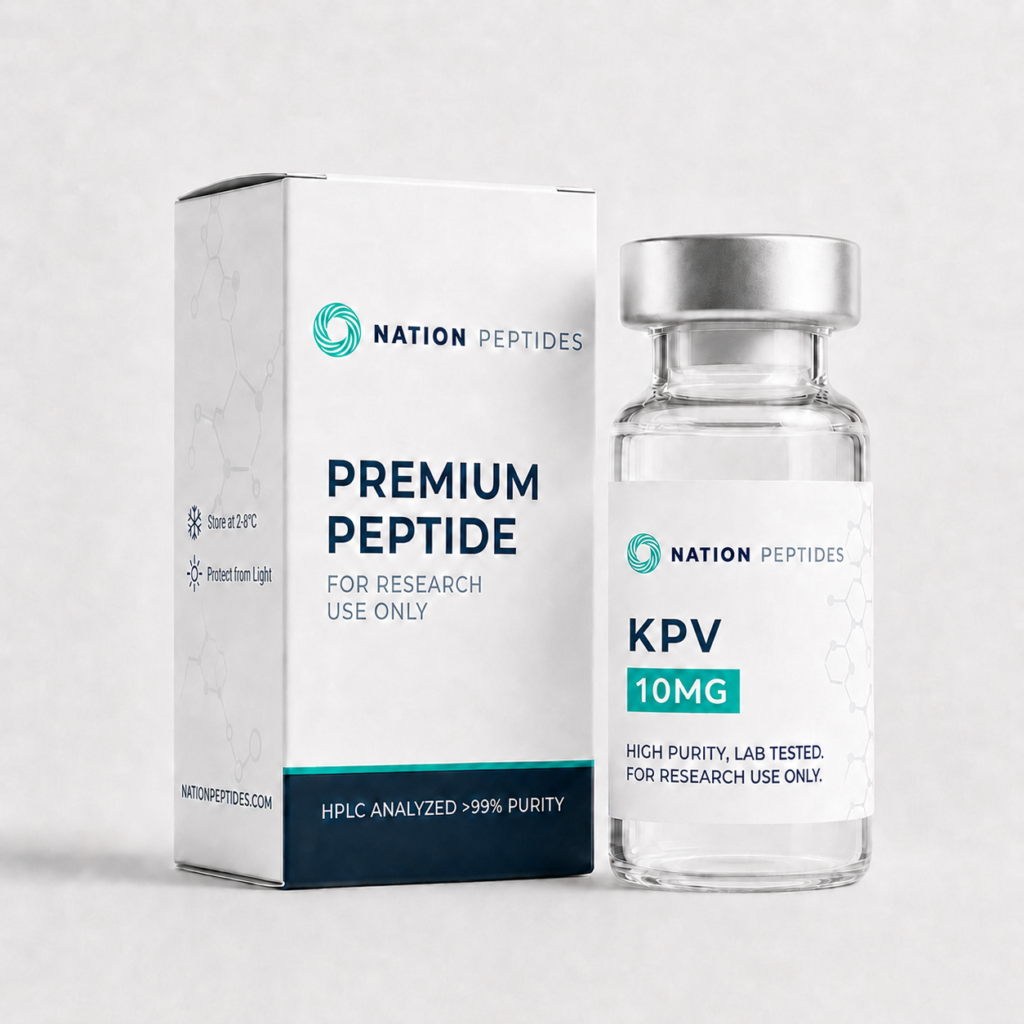
Let us get specific about the product itself. Nation Peptides offers KPV as a research compound in a white lyophilized powder, lyophilized domestically for freshness and stability. If you have been looking for KPV peptide for sale from a supplier that publishes lab results, the KPV product page lays everything out clearly.
The KPV 10mg vial is the strength currently available, and it comes with the following:
- A batch-matched certificate of analysis
- 99.89% verified purity on the current lot
- Independent identity, purity, sterility, and endotoxin results
- A QR code on the label that links to the exact lot report
- Same-day dispatch on orders placed before the daily cutoff
- Discreet, tracked delivery in 2 to 3 days from a domestic warehouse
- A money-back guarantee backed by independent testing
Researchers can order single vials or multi-vial packs, depending on how large their protocol is. A 10ml reconstitution vial is available as well, so everything needed to prepare the compound can be added to the same order.
Here is why that convenience matters. A protocol is only as smooth as its supply chain. When the compound, the diluent, and the documentation all come from one verified source, there are fewer places for variables to creep in.
KPV in Multi-Pathway Research: Klow and Related Compounds
KPV rarely works alone in modern protocols. Many laboratories pair it with other compounds to study overlapping pathways. Nation Peptides makes that easy with several related products.
Klow Blend
Klow is a four-peptide research complex combining GHK-Cu, BPC-157, TB-500, and KPV. It is designed for multi-pathway investigation of:
- Extracellular matrix remodeling
- Angiogenic signaling
- Cellular migration
- Inflammatory-response regulation
The blend arrives in an 80mg vial, and the current lot passed independent testing at 99.38% purity via HPLC. Klow is a bestseller, and it is a good fit for researchers who want several mechanisms in a single, verified preparation.
GHK-Cu, BPC-157, and TB-500
Each of the other components has its own research story, and Nation Peptides sells each one individually:
- GHK-Cu: a naturally occurring copper-binding tripeptide investigated for extracellular matrix remodeling, antioxidant gene expression, and wound-repair pathways
- BPC-157: a widely studied compound, available in 10mg and 5mg strengths
- TB-500: offered in a 10mg strength
Buying the components separately gives you full control over ratios. Buying Klow gives you convenience and consistency. Both routes are backed by batch-matched COAs.
Stacks for Comparative Work
Nation Peptides also offers a dedicated Stacks category for researchers who like curated combinations. Two examples stand out:
- Repair Stack: one BPC-157 and one TB-500
- Glow Blend: a triple-peptide complex combining GHK-Cu, BPC-157, and TB-500
Pairing a Glow Blend run with a KPV run is one practical way to compare a regeneration-focused preparation against an inflammation-focused one. The structure keeps your variables tidy, which is exactly what comparative protocols require.
Handling, Storage, and Reconstitution
Even the purest compound can be ruined by poor handling. Good habits protect your investment and your data.
Storing Lyophilized Vials
Lyophilized KPV is stable when kept properly. Follow these guidelines:
- Keep the sealed vial in a freezer
- Store it away from light
- Leave it undisturbed until you are ready to use it
- Check the COA for batch-specific notes
Reconstituting Step by Step
Reconstitution turns the powder into a working solution. The method is gentle and simple:
- Gather your diluent. The Nation Peptides reconstitution vial contains bacteriostatic water (0.9% benzyl alcohol), a sterile diluent made for this purpose
- Add the diluent slowly down the inside wall of the vial, never directly onto the powder
- Swirl gently until the powder dissolves
- Avoid shaking, which can damage the structure
The exact diluent volume depends on your protocol and the strength of the vial you are using. Plan your concentration before you begin, and record it.
After Reconstitution
Once the powder is dissolved, the clock starts ticking. Here is how to protect the solution:
- Store it in the refrigerator
- Label the vial with the date of reconstitution
- Reference the COA for stability guidance
- Remember that stability varies by compound, but most reconstituted research peptides hold up well under refrigeration for a few weeks
Good records make for good science. A simple log of dates, volumes, and storage conditions can save you from questions later.
Ordering, Shipping, and Support
A strong supply chain should feel invisible. Here is how Nation Peptides keeps the process smooth.
Ordering is straightforward:
- Browse by research area, including Cellular Regeneration, Metabolic Modulation, Aesthetic Biology, Lifespan Extension, Anabolic Signalling, and Research Equipment
- Add your compounds and reconstitution supplies to one cart
- Check out securely with encrypted, SSL-protected payment
Shipping is fast and tracked:
- Same-day dispatch on orders placed before the daily cutoff
- Domestic warehouses in the US, EU, and Australia
- Delivery in 2 to 3 days
- Discreet packaging with no identifying markers
Shipping from the warehouse closest to you means nothing crosses a border in transit. That reduces delays and keeps your timeline predictable.
Support is human: a real team answers questions quickly, and the brand holds a 4.98 rating across more than 3,200 verified reviews. When a researcher has a question about a batch, a COA, or a shipment, a person responds.
Responsible Research Use
Every product from Nation Peptides is sold strictly for laboratory and research use. These compounds are not drugs, foods, cosmetics, or dietary supplements. They are not evaluated by the U.S. Food and Drug Administration, and they are not intended for human or animal consumption.
Keep these principles in mind:
- Purchase only if you are 21 or older and a qualified researcher
- Use materials only for in vitro and laboratory work
- Follow your institution’s safety and handling standards
- Document your protocols and sources for reproducibility
Responsible use protects both the science and the people doing it.
Final Thoughts
KPV earns its reputation the honest way. It is small, precise, and tied to some of the most important pathways in inflammation biology. Researchers study its effects on NF-κB and MAPK signaling, its influence on cytokines such as TNF-α and IL-6, and its fit with epithelial immune-response models.
But none of that science matters if the material in your vial is not what the label says. Verified purity, third-party testing, and batch-matched documentation are what turn an interesting compound into a dependable research tool.
Pair KPV with GHK-Cu, BPC-157, or TB-500, or explore Klow for a multi-pathway approach, and you have a flexible toolkit for comparative work. Handle it carefully, document everything, and let the data speak.
Ready to Start Your KPV Research?
If you are looking for KPV peptide for sale from a supplier that proves its quality, Nation Peptides is ready. Every batch is independently tested, every certificate is public, and every order ships fast from a domestic warehouse.
Shop KPV at Nation Peptides and see the lab report before you buy. Your research deserves a verified source.
FAQs
Q. What does “lyophilized” mean?
A. It means freeze-dried. Water is removed under low temperature and vacuum, leaving a stable powder that stores better and travels well until you add a diluent.
Q. Does KPV carry the pigmentary activity of α-MSH?
A. Not in the model reported. KPV showed anti-inflammatory activity without inducing cutaneous pigmentation in a frog skin bioassay.
Q. Who can purchase from Nation Peptides?
A. Buyers must be at least 21 and confirm they are qualified researchers purchasing for in vitro or laboratory use only. A researcher verification step appears when you enter the site.
Q. Which payment methods are accepted?
A. Visa, Mastercard, American Express, and Apple Pay are accepted at an encrypted, SSL-secured checkout.
Q. How is my vial tied to the posted certificate?
A. The certificate lists a batch number, and that lot matches the vials you receive. Scanning the QR code on your label takes you straight to that exact report.
Q. What if a vial tests below expectations?
A. Nation Peptides guarantees 98% or higher purity. Send an independent test result and the team will make it right, with a refund where appropriate.

